
Sexual Practices and HIV/AIDS Vulnerability Among Adolescents in Lokoja, North-Central Nigeria: Mixed-Method Cross-Sectional Study
Article Sidebar
Main Article Content
Abstract
Background: Adolescents are particularly vulnerable to HIV due to unsafe sexual practices and limited access to sexual and reproductive health services. In Nigeria, risky behaviours contribute substantially to HIV transmission, yet evidence on the interaction between knowledge, behaviour, and socio-economic factors among adolescents in Lokoja is limited. This study assessed sexual practices, condom use patterns, sources of HIV/AIDS information, and factors influencing HIV vulnerability among adolescents in Lokoja, North-Central Nigeria.
Methods: A mixed-methods descriptive cross-sectional study was conducted among 400 adolescents aged 10–19 years. Multistage sampling was used for the quantitative survey, while purposive sampling recruited participants for six focus group discussions (FGDs). Quantitative data were analysed using SPSS version 25 with descriptive statistics and chi-square tests. Qualitative data were analysed thematically to explore perceptions, experiences, and socio-cultural influences on sexual behaviour.
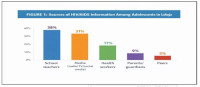
Results: Of respondents, 45.5% reported ever having sexual intercourse, and 34.5% were currently sexually active. Among sexually active adolescents, 30.8% used condoms consistently, 46.2% occasionally, and 23% never. School teachers (38%) and media (31%) were the main sources of HIV information. Risky behaviours were significantly associated with multiple sexual partners, inconsistent condom use, and peer influence. FGDs highlighted barriers including peer pressure, economic constraints, and limited parental guidance.
Conclusion: Adolescents in Lokoja engage in risky sexual behaviours despite HIV knowledge. Interventions should promote consistent condom use, strengthen peer and parental education, improve adolescent-friendly services, and address socio-economic determinants.
Downloads
Article Details
Section

This work is licensed under a Creative Commons Attribution-NonCommercial-ShareAlike 4.0 International License.
The Journal is owned, published and copyrighted by the Nigerian Medical Association, River state Branch. The copyright of papers published are vested in the journal and the publisher. In line with our open access policy and the Creative Commons Attribution License policy authors are allowed to share their work with an acknowledgement of the work's authorship and initial publication in this journal.
This is an open access journal which means that all content is freely available without charge to the user or his/her institution. Users are allowed to read, download, copy, distribute, print, search, or link to the full texts of the articles in this journal without asking prior permission from the publisher or the author.
The use of general descriptive names, trade names, trademarks, and so forth in this publication, even if not specifically identified, does not imply that these names are not protected by the relevant laws and regulations. While the advice and information in this journal are believed to be true and accurate on the date of its going to press, neither the authors, the editors, nor the publisher can accept any legal responsibility for any errors or omissions that may be made. The publisher makes no warranty, express or implied, with respect to the material contained herein.
TNHJ also supports open access archiving of articles published in the journal after three months of publication. Authors are permitted and encouraged to post their work online (e.g, in institutional repositories or on their website) within the stated period, as it can lead to productive exchanges, as well as earlier and greater citation of published work (See The Effect of Open Access). All requests for permission for open access archiving outside this period should be sent to the editor via email to editor@tnhjph.com.
How to Cite
References
1.National Agency for the Control of AIDS (NACA). Global AIDS Response Country Progress Report: Nigeria 2022. Abuja: NACA; 2022.
2.Bankole A, Singh S, Woog V. Risk and protection: Sexual behaviour of adolescents in sub-Saharan Africa. New York: Guttmacher Institute; 2021.
3.National Population Commission (NPC) [Nigeria], ICF. Nigeria Demographic and Health Survey 2018/2021. Abuja and Rockville (MD): NPC and ICF; 2022.
4.Olumide AO, Oke OA, Ladipo OA. Peer influence and adolescent sexual behaviour in Lagos, Nigeria. Niger J Clin Pract. 2019;22(5):640-648. https://doi.org/10.4103/njcp.njcp_198_18
5.Ezeanolue EE, Wokoma FS, Ojile JC, et al. Knowledge, attitudes and practices regarding HIV/AIDS among adolescents in Enugu State, Nigeria. J AIDS Clin Res. 2018;9(5):768. https://doi.org/10.4172/2155-6113.1000768
6.Onyeonoro UU, Ibeh CC, Nwokoro CA. Sexual risk behaviours and HIV vulnerability among Nigerian adolescents. Pan Afr Med J.2020; 37:22. https://doi.org/10.11604/pamj.2020.37.22.21029
7.Adejumo OA, Olaleye DO, Akinyemi JO. Socioeconomic determinants of risky sexual behaviour among adolescents in Nigeria. BMC Public Health.2021;21:1390. https://doi.org/10.1186/s12889-021-11372-9
8.Adebowale AS, Palamuleni ME. Prevalence and correlates of HIV testing among Nigerian adolescents: Analysis of the Nigeria Demographic and Health Survey. BMC Public Health.2019;19:1273. https://doi.org/10.1186/s12889-019-7612-7
9.Okafor CN, Okechukwu AA, Egwuonwu GO. Patterns and determinants of sexual risk behaviours among adolescents in sub-Saharan Africa: A systematic review. Afr J Reprod Health. 2021;25(4):33-47.
10.Joint United Nations Programme on HIV/AIDS (UNAIDS). Global AIDS Update 2023. Geneva: UNAIDS; 2023.
11.World Health Organization. Adolescent HIV Prevention Report. Geneva: WHO; 2024.
12.UNICEF. Adolescents, HIV and AIDS: Global Snapshot. New York: UNICEF; 2023.
13.Federal Ministry of Health. National HIV/AIDS Strategic Framework 2021–2025. Abuja: Federal Ministry of Health; 2021.
14.Folayan MO, Sam-Agudu NA, Harrison A. Risk factors for HIV and barriers to sexual and reproductive health services among adolescents in Nigeria. BMC Health Serv Res.2022;22:1198. https://doi.org/10.1186/s12913-022-08551-9
15.Envuladu EA, Massar K, de Wit J. Healthcare workers’ delivery of adolescent-responsive sexual and reproductive health services in Nigeria. BMC Womens Health.2023;23:132. https://doi.org/10.1186/s12905-023-02288-1
16.Lawal RO, Akinsulore A, Oginni OA, Aloba OO, Mosaku SK, Akanmu AS. Depression and psychological factors among adolescents living with HIV in Nigeria. BMC Psychiatry.2023;23:531. https://doi.org/10.1186/s12888-023-04912-8
17.Ezelote CJ, Osuoji NJ, Mbachu AJ, et al. Effect of peer health education intervention on HIV knowledge among adolescents in Nigeria. BMC Public Health.2024;24:1029. https://doi.org/10.1186/s12889-024-18536-4
18.Gbaja-Biamila T, Obiezu-Umeh C, Nwaozuru U, et al. Awareness and willingness to use pre-exposure prophylaxis among youth in Nigeria. BMC Health Serv Res.2024;24:1128. https://doi.org/10.1186/s12913-024-11459-1
19.Danjuma G, Umar ML, Mohammed A, et al. Predictors of HIV risk behaviours among in-school and out-of-school youths in Nigeria. BMC Public Health.2025;25:3587. https://doi.org/10.1186/s12889-025-24784-9
20.Okunlola DA, Alawode OA, Opara CV, et al. Sexual behaviours and self-reported sexually transmitted infections among youths in Nigeria. BMC Infect Dis.2025;25:1515. https://doi.org/10.1186/s12879-025-11836-z
21.Wang M, Oyebamiji MO, Igharo AE, et al. Prevalence of HIV and hepatitis B among adolescents seeking healthcare services in Nigeria. Afr J Reprod Health. 2025;29(6):58-71. https://doi.org/10.29063/ajrh2025/v29i6.6
22.Govender K, Cowden RG, Nyamaruze P, Armstrong RM, Hatane L. Beyond the disease: Contextual factors affecting adolescent HIV risk in sub-Saharan Africa. BMC Public Health.2020;20:123. https://doi.org/10.1186/s12889-020-8221-y
23.Pettifor A, Nguyen NL, Celum C, Cowan FM, Go V, Hightow-Weidman L. Tailored combination prevention packages for young key populations. J Int AIDS Soc. 2020;23(S5):e25516. https://doi.org/10.1002/jia2.25516
24.Mmari K, Blum RW. Risk and protective factors affecting adolescent reproductive health in developing countries. J Adolesc Health. 2020;66(1):S16-S25. https://doi.org/10.1016/j.jadohealth.2019.11.311
25.Kabiru CW, Izugbara CO, Beguy D. Health and wellbeing of young people in sub-Saharan Africa. Glob Health Action. 2021;14(1):1887691. https://doi.org/10.1080/16549716.2021.1887691