
Assessment of Nutritional Knowledge, Dietary Diversity, and Nutritional Status of Pregnant Adolescents in Bauchi State: A Cross-Sectional Study
Article Sidebar
Main Article Content
Abstract
Background: Teenage pregnancy poses major nutritional and physiological risks for both mother and fetus. This research evaluated the nutrition knowledge, dietary diversity, and nutritional knowledge of pregnant adolescents in Bauchi State.
Methods: An analytical cross-sectional study design was conducted among 200 pregnant adolescents aged 10-19 years selected from Comprehensive Primary Health Centres in Dambam and Alkaleri through multistage sampling. Nutrition Knowledge was measured using a 20-item validated questionnaire. Dietary diversity was assessed using FAO Minimum Dietary Diversity for Women (MDD-W) questionnaire. Nutritional status was determined using Mid-Upper Arm Circumference (MUAC) while blood samples were analysed for Packed Cell Volume (PCV) and serum Vitamin B12. Data was analysed using Statistical Package for Social Sciences (SPSS v25), Chi-square tested bivariate associations and multivariate logistic regression identified independent predictors at p<0.05.
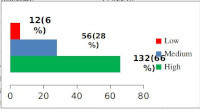
Results: Findings revealed that 66% (n=132) had high nutrition knowledge scores, 53.5% (n=107) achieved adequate dietary diversity (≥5 food groups) and 74.5% (n=149) were undernourished (MUAC <23cm). Most adolescents had adequate Vitamin B12 levels (83%, n=166) but 43.5% (n=87) had low-normal PCV (33-35%). Multivariate analysis revealed that pregnant adolescents in Dambam had higher odds of inadequate dietary diversity compared to those in Alkaleri (AOR=1.7, 95% CI: 1.2-2.6, p=0.035). Adolescents from Polygamous families also had higher odds of inadequate dietary diversity compared to monogamous counterparts (AOR=1.8, 95% CI: 1.3-2.5, p=0.036).
Conclusion: Despite high nutrition knowledge among participants, undernutrition remained high highlighting the need for effective strategies addressing both socioeconomic constraints and improved dietary access in the region.
Downloads
Article Details
Section

This work is licensed under a Creative Commons Attribution-NonCommercial-ShareAlike 4.0 International License.
The Journal is owned, published and copyrighted by the Nigerian Medical Association, River state Branch. The copyright of papers published are vested in the journal and the publisher. In line with our open access policy and the Creative Commons Attribution License policy authors are allowed to share their work with an acknowledgement of the work's authorship and initial publication in this journal.
This is an open access journal which means that all content is freely available without charge to the user or his/her institution. Users are allowed to read, download, copy, distribute, print, search, or link to the full texts of the articles in this journal without asking prior permission from the publisher or the author.
The use of general descriptive names, trade names, trademarks, and so forth in this publication, even if not specifically identified, does not imply that these names are not protected by the relevant laws and regulations. While the advice and information in this journal are believed to be true and accurate on the date of its going to press, neither the authors, the editors, nor the publisher can accept any legal responsibility for any errors or omissions that may be made. The publisher makes no warranty, express or implied, with respect to the material contained herein.
TNHJ also supports open access archiving of articles published in the journal after three months of publication. Authors are permitted and encouraged to post their work online (e.g, in institutional repositories or on their website) within the stated period, as it can lead to productive exchanges, as well as earlier and greater citation of published work (See The Effect of Open Access). All requests for permission for open access archiving outside this period should be sent to the editor via email to editor@tnhjph.com.
How to Cite
References
1.Kabahenda MK, Stoecker BJ. Associations between maternal dietary intake and nutritional status with fetal growth at 14 to 26 weeks’ gestation: a cross-sectional study. BMC Nutr. 2024;10(1):77. doi:10.1186/s40795-024-00885-3.
2.Brink LR, Bender TM, Davies R, et al. Optimizing maternal nutrition: the importance of a tailored approach. Curr Dev Nutr. 2022;6(9):nzac118. doi:10.1093/cdn/nzac118.
3.Ohaja M, Anyim C. Rituals and embodied cultural practices at the beginning of life: African perspectives. Religions. 2021;12(11):1024. doi:10.3390/rel12111024.
4.Ntshayintshayi PN, Sehularo LA, Mokgaola IO, Sepeng NV. Exploring the psychosocial challenges faced by pregnant teenagers in Ditsobotla subdistrict. Health SA. 2022;27:1880. doi:10.4102/hsag.v27i0.1880.
5.Marshall NE, Abrams B, Barbour LA, et al. The importance of nutrition in pregnancy and lactation: lifelong consequences. Am J Obstet Gynecol. 2022;226(5):607–632. doi: 10.1016/j.ajog.2021.12.035.
6.Asmamaw DB, Tafere TZ, Negash WD. Prevalence of teenage pregnancy and its associated factors in high fertility sub-Saharan African countries: a multilevel analysis. BMC Womens Health. 2023;23(1):23. doi:10.1186/s12905-023-02169-7.
7.Alukagberie ME, Elmusharaf K, Ibrahim N, Poix S. Factors associated with adolescent pregnancy and public health interventions to address it in Nigeria: a scoping review. Reprod Health. 2023;20(1):95. doi:10.1186/s12978-023-01629-5.
8.Oyewole R. 75.1% of Bauchi women marry before attaining 18 – UNICEF. The Guardian (Nigeria). 2023 Dec 10 [cited 2025 Sep 25]. Available from: https://guardian.ng/news/75-1-of-bauchi-women-marry-before-attaining-18-unicef/
9.Sani U. Three of 10 Bauchi pregnant women deliver at home – UNICEF. Punch Newspapers. 2025 Dec 12 [cited 2025 Oct 6]. Available from: https://punchng.com/three-of-10-bauchi-pregnant-women-deliver-at-home-unicef/
10.National Bureau of Statistics (NBS). Nigeria multidimensional poverty index 2022. Abuja: NBS; 2022 [cited 2024 Jun 28]. Available from:
11.United Nations Children’s Fund (UNICEF). Literacy among young women: Nigeria [Internet]. New York: UNICEF; [cited 2025 Sep 22]. Available from: https://www.unicef.org/nigeria/media/1631/file
12.National Bureau of Statistics (NBS). National nutrition and health survey 2018. Abuja: NBS; 2018 [cited 2023 Sep 30]. Available from: https://www.unicef.org/nigeria/media/2181/file/Nigeria-NNHS-2018.pdf
13.Food and Agriculture Organization (FAO). Minimum dietary diversity for women. Rome: FAO; 2021. Available from: https://openknowledge.fao.org/handle/20.500.14283/cb3434en
14.Edmond C. Malnutrition in women and girls has soared 25% in crisis-hit countries. World Economic Forum. 2023 Mar 29 [cited 2026 Mar 22]. Available from: https://www.weforum.org/stories/2023/03/malnutrition-poverty-women-inequality-pregnancy/
15.Tesfaye A, Adissu Y, Tamiru D, Belachew T. Nutritional knowledge, nutritional status and associated factors among pregnant adolescents in the West Arsi Zone, central Ethiopia. Sci Rep. 2024;14(1):6879. doi:10.1038/s41598-024-57428-w.
16.Musinguzi E, Nannono P, Ampumuza M, et al. Dietary diversity, undernutrition, and predictors among pregnant adolescents and young women attending Gulu University Teaching Hospitals in northern Uganda. PLoS One. 2024;19(7):e0307749. doi: 10.1371/journal.pone.0307749.
17.Appiah PK, Naa Korklu AR, Bonchel DA, et al. Nutritional knowledge and dietary intake habits among pregnant adolescents attending antenatal care clinics in an urban community in Ghana. J Nutr Metab. 2021;2021:8835704. doi:10.1155/2021/8835704.
18.Samuel OT, Aremu O, Ariyo O. Nutrition knowledge, dietary diversity and intake among pregnant adolescents in Ibadan metropolis, Nigeria. Niger J Public Health. 2020;5:69–79. Available from: https://www.researchgate.net/publication/358565594
19.Araoye MO. Research methodology with statistics for health and social sciences. Ilorin: Nathadex Publishers; 2004.
20.Cogill B. Anthropometric indicators measurement guide. Rev ed. Washington (DC): Food and Nutrition Technical Assistance Project (FANTA); 2003.
21.Sphere Association. The Sphere handbook: humanitarian charter and minimum standards in humanitarian response. 3rd ed. Geneva: Sphere Association; 2018 [cited 2026 Mar 22]. Available from: https://spherestandards.org/wp-content/uploads/Sphere-Handbook-2018-EN.pdf
22.Tang AM, Dong K, Deitchler M, Chung M, Maalouf-Manasseh Z, et al. Use of cutoffs for mid-upper arm circumference (MUAC) as an indicator or predictor of nutritional and health-related outcomes in adolescents and adults: a systematic review. Washington (DC): FHI 360/FANTA; 2013 [cited 2026 Mar 22]. Available from: https://www.fantaproject.org
23.Gyimah LA, Annan RA, Apprey C, et al. Nutritional status and birth outcomes among pregnant adolescents in Ashanti Region, Ghana. Hum Nutr Metab. 2021;26:200130. doi:10.1016/j.hnm.2021.200130.
24.Centers for Disease Control and Prevention (CDC). Laboratory procedure manual: vitamin B12 (B12). Atlanta (GA): CDC; 2011 [cited 2026 Mar 22]. Available from: https://www.cdc.gov
25.National Institutes of Health, Office of Dietary Supplements. Vitamin B12: fact sheet for health professionals. Bethesda (MD): NIH; 2023 Dec 15 [cited 2026 Mar 22]. Available from: https://ods.od.nih.gov/factsheets/VitaminB12-HealthProfessional/
26.Bain BJ, Bates I, Laffan MA. Dacie and Lewis practical haematology. 12th ed. London: Elsevier; 2020.
27.World Health Organization. Haemoglobin concentrations for the diagnosis of anaemia and assessment of severity. Geneva: WHO; 2011 [cited 2026 Mar 22]. Available from: https://iris.who.int/handle/10665/85839
28.Jawzali JI, Abdullah SI, Abdullah NH. Nutritional status among pregnant adolescents at maternity teaching hospital. North Afr J Food Nutr Res. 2022;6(14):186–197. doi:10.51745/najfnr.6.14.186-197.
29.Yimer B, Wolde A. Prevalence and predictors of malnutrition during adolescent pregnancy in southern Ethiopia: a community-based study. BMC Pregnancy Childbirth. 2022;22(1):130. doi:10.1186/s12884-022-04460-1.
30.Médecins Sans Frontières. MSF treats overwhelming surge of malnutrition cases in Nigeria’s Bauchi State [Internet]. 2024 Aug 6 [cited 2026 Mar 22]. Available from: https://www.doctorswithoutborders.org
31.Falaju J. Expert raises alarm over adolescents’ nutrition crisis. The Guardian (Nigeria). 2025 Jul 11 [cited 2026 Mar 22]. Available from: https://guardian.ng
32.Abubakar HA, Shahril MR, Mat S. Nutritional status and dietary intake among Nigerian adolescents: a systematic review. BMC Public Health. 2024;24(1):1764. doi:10.1186/s12889-024-19219-w.
33.Médecins Sans Frontières. Levels of global acute malnutrition have doubled since last year in parts of northwest Nigeria [Internet]. 2024 Dec 5 [cited 2026 Mar 22]. Available from: https://www.msf.org
34.Sosanya ME, Freeland-Graves JH, Gbemileke AO, et al. Why acute undernutrition? A qualitative exploration of food preferences and perceptions among adolescent girls in rural Nigeria. Nutrients. 2024;16(2):204. doi:10.3390/nu16020204.
35.Belay DG, Amlak BT, Chilot D, et al. Pooled prevalence of anaemia and its associated factors among adolescent girls in East and West Africa: a systematic review and meta-analysis. BMC Public Health. 2025;25(1):2482. doi:10.1186/s12889-024-20892-0.
36.World Health Organization. Social determinants of health. Geneva: WHO; 2024 [cited 2026 Mar 22]. Available from: https://www.who.int
37.Monge-Rojas R, Vargas-Quesada R, Gómez G. Role of residence area on diet diversity and micronutrient intake adequacy in urban and rural Costa Rican adolescents. Nutrients. 2022;14(23):5093. doi:10.3390/nu14235093.
38.Golan J, Isopi A. Bargaining power and inheritance norms: evidence from polygamous households in Nigeria. Manchester: University of Manchester; 2022.